It starts with your own data
Your jobs, your customers, your equipment, your history. The raw material that already lives in your business, gathered into one place instead of scattered across spreadsheets and inboxes.
Customer Experience Systems · Mobile
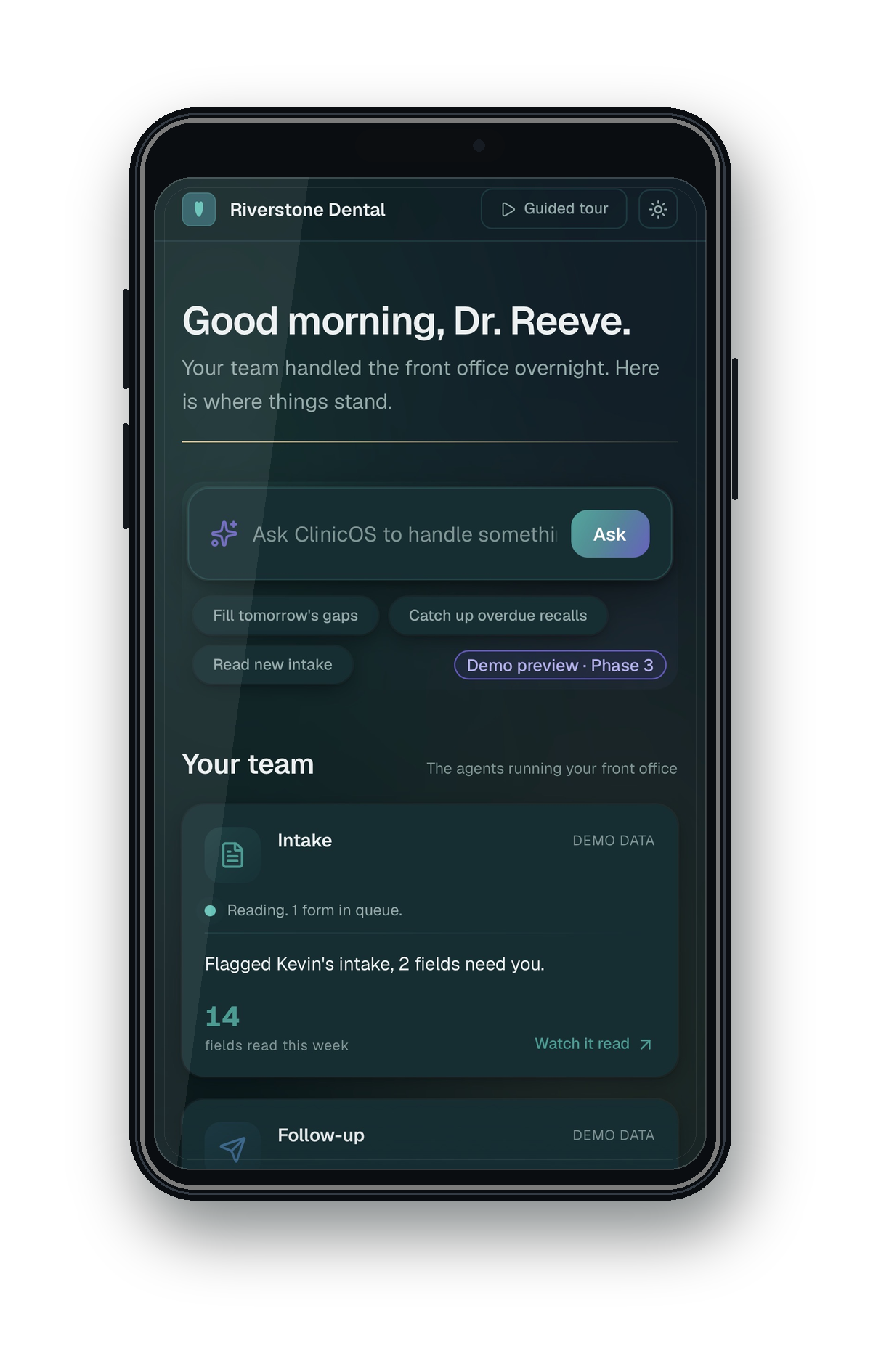
Native iOS and Android apps for crews and field teams, with AI in the app: snap the nameplate, it reads and structures it, the quote drafts itself, the crew taps once.
Built on your real jobs, your crew, and your data, so the AI running inside it is actually useful where the work happens.
The intelligence layer, in hand
Point the phone at a nameplate. The intelligence layer reads it, structures it, and drafts the next step, before the crew leaves the site.
Snap the nameplate, the form, the receipt.
The AI layer reads it and structures it, right in the app.
The quote drafts itself. The crew taps once.
What the intelligence layer is
The intelligence layer takes the data your business already produces and turns it into something that reasons about your work. This is a layer built on your own data, not a generic model bolted on, so it is useful to you in a way it could be to no one else.
Your jobs, your customers, your equipment, your history. The raw material that already lives in your business, gathered into one place instead of scattered across spreadsheets and inboxes.
On top of that data sits a layer that reads, structures, and reasons over it. Trained on how your business works, so it is useful to you in a way it could never be to anyone else.
A crew snaps a photo of a nameplate, a customer describes a problem in their own words, and the app turns it into structured, usable data on the spot.
Drafts the quote, fills the form, flags the follow-up, suggests the part. The intelligence works underneath the buttons, so the person taps less and finishes more.
Your data, made intelligent. The systems that do it, built here
Why it goes mobile
A dashboard on a wall only helps at the wall. On a phone, the whole record, and the intelligence reading it, travels with the person doing the job. The work moves; the data's intelligence moves with it.
In a gloved hand, in bright sun, on a spotty signal. The full record is there at the panel, the bench, the roof, not waiting back at a desk.
Between stops, in the truck, at the gate. Capture the job, read the equipment, and write most of the paperwork before the next call.
Pull up the history, draft the quote, and answer the question while you are standing there. The business speaks with one voice, on the spot.
This looks like you
Who holds the phone changes what the app does. The intelligence layer underneath stays the same. These are archetypes, not clients.
The tech photographs the nameplate, the app reads it and fills the job, the quote drafts itself. Sign-offs, photos, and notes are captured at the panel, not retyped at a desk that night.
A branded app the customer opens instead of calling. They book, see their history, approve a quote, and get the reminder, while the intelligence layer keeps the record current on your side.
What the crew captures in the field is the record the office sees, live. The intelligence reads it on the way in, no re-keying and no end-of-day pile, so the next step is teed up before anyone touches it.
What changes
The app reads what people photograph and type, structures it, and drafts the next step. The person confirms instead of types.
Most of the record is written at the site. The night shift of catching up on data entry shrinks.
The draft is ready before the crew leaves. The follow-up that used to wait a day goes out on the spot.
Field and office work from the same live data, not two copies that drift apart by Friday.
More in Operational Systems
Operational Systems overview → · Wondering why a subscription is not enough? Why Custom-Built →
The operating system these build toward
A mobile app is how a connected operating system reaches the field.
Read the full guideGet in touch
We specialize in things that are unique to individual businesses. If that's you, contact us. A conversation is enough to make an educated decision.
Before you ask
Both, from one codebase. The app ships to iPhone and Android with one build and one team maintaining it. Web too, if the work calls for it.
Yes, where the work needs it. The app captures the job, reads the equipment, and writes the record on a dead signal, then syncs when it is back. The intelligence is built to live where the work happens.
On infrastructure you own, hosted in Canada. The intelligence layer is built on your own data, for your business alone. What reaches a model and what stays local is decided in writing in the Blueprint, before any code.
If the work happens on a desk, a web command center is often the right call, and we will say so. An app earns its place when the work is in a gloved hand, in the field, or in front of a customer, and the phone is already in the pocket.
No. The raw material already lives in your business, scattered across spreadsheets and inboxes. Part of the build is gathering it into one place and building the layer that makes it intelligent. The Blueprint defines what is there and what to do with it.
Scoped in the Blueprint™, then quoted as a fixed number for the build. The Blueprint is $2,500, credited in full toward the build if it proceeds. One build cost across both platforms, no hourly billing.
For individual drafting, summarizing, and learning, yes, and you should. A subscription is a general-purpose tool a person opens and prompts. It has no standing connection to your systems, no memory of how your business runs, and it only acts when someone drives it. That is a productivity tool for a person, not an AI system for a business. When you need AI embedded in a workflow, governed, and reliable enough to depend on, you have outgrown the subscription.
When the work needs to run inside your software, not at a keyboard. APIs let you embed models in the tools you already use, choose the model per task (Claude, GPT-class, Gemini, or open-source), set data-retention terms in writing, and pay per token at volume instead of stacking $20–100/month seats across a team. That is the path from "everyone has a login" to a system the business runs on. The Blueprint defines whether you are there yet.
Get in touch
Confirm your call
You’re booked.
Confirmation sent. Carter will see you then.
By chatting you agree to our privacy terms. Stored in Canada; replies are generated by a US model provider.
I couldn’t reach the calendar just now. Here’s a direct booking link. Book a call
Still here. Ready whenever you are.
Try: "What is the Blueprint?", "How does AI Development work?", "What does a build cost?"